



Power Factor Improvement System Using Arduino
Services:
Complete Project + Thesis Book (Soft Copy) + Presentation Slide (Soft Copy)
Detailed Video: Power Factor Improvement System Using Arduino
জবের পাশাপাশি B.Sc. or M.Sc. in Engineering Study করছেন? গ্রুপের সবাই Final Year প্রজেক্টের জন্য সম্মিলিত ভাবে সময় বের করতে পারছেন নাহ? “কম খরচে” এবং “কম সময়ে” আপনার প্রয়োজনীয় প্রজেক্ট টি পেতে চান? আপনাদের জন্যই কাজ করছে “#Engineers_Butty_Lab_BD” আপনার প্রয়োজনীয় প্রজেক্ট, থিসিস বুক , প্রেজেন্টেশন স্লাইড পেতে যোগাযোগ করুন।
আমরা কি ধরনের প্রজেক্ট করি?
Mechanical Project, Raspberry Pi Project, Arduino Based Project, ESP8266 based Project, GSM Based Project, Robotic Project, Solar Based Project, IoT based Project, Drone Project.
মোটকথা আপনার যা প্রয়োজন পেয়ে যাবেন আমাদের থেকে। বি.দ্র: (বিকাশ-নগদ-রকেট) এর মাধ্যমে ৭৫% এডভান্স পেমেন্ট করলে বাংলাদেশের যে কোনো জেলায় হোম ডেলিভারি পেয়ে যাবেন!
18,000৳
Payment Methods:
Description
Power Factor Improvement System Using Arduino
Project Overview
The Power Factor Improvement System is an embedded system–based electrical project designed to automatically monitor and improve the power factor of an AC electrical load. Poor power factor leads to increased power losses, voltage drops, reduced efficiency, and higher electricity bills. This system continuously measures electrical parameters and dynamically compensates reactive power by switching capacitor banks, ensuring the power factor remains close to unity.
The project is ideal for industrial, educational, and laboratory applications, demonstrating real-time power quality management using a microcontroller.
Working Principle
Most inductive loads such as motors, transformers, and fluorescent lamps cause the current to lag behind the voltage, resulting in a low power factor. This system:
-
Measures voltage, current, real power, apparent power, and power factor.
-
Calculates the reactive power required for correction.
-
Automatically switches capacitor banks using relay modules.
-
Improves the power factor toward unity (≈1.0).
-
Displays real-time power factor and correction status on an LCD.
Main Components Used
-
Arduino Nano – Core controller for processing and control
-
PZEM-004T Energy Meter Module – Measures voltage, current, power, energy, and power factor
-
Current Transformer (CT) – For current sensing
-
Relay Module – Controls capacitor bank switching
-
Capacitor Bank – Provides reactive power compensation
-
AC Load (Lamp/Motor) – Demonstration load
-
LCD Display (16×2) – Displays power factor and system status
-
SMPS Power Supply – Provides regulated DC power
-
Switches & Protection Components – For safe operation
System Operation
-
When the system is powered ON, the Arduino reads real-time electrical parameters from the PZEM-004T module.
-
If the power factor drops below a preset threshold, the controller activates relays to connect appropriate capacitors.
-
Capacitors compensate reactive power and improve the power factor.
-
The updated power factor value is continuously displayed on the LCD.
-
If the power factor exceeds the required limit, capacitors are automatically disconnected to prevent overcompensation.
Key Features
-
Automatic power factor correction
-
Real-time monitoring of electrical parameters
-
Microcontroller-based intelligent control
-
LCD display for live status
-
Reduced power losses and improved efficiency
-
Scalable capacitor bank design
-
Safe and reliable operation
Applications
-
Industrial power systems
-
Electrical substations
-
Smart energy management systems
-
Educational and laboratory demonstrations
-
Power quality monitoring solutions
Advantages
-
Reduces electricity penalties due to low power factor
-
Improves voltage stability
-
Increases system efficiency
-
Minimizes transmission losses
-
Extends equipment lifespan
Conclusion
The Power Factor Improvement System using Arduino is a practical and cost-effective solution for maintaining optimal power quality. By automatically compensating reactive power, it ensures efficient energy usage, reduces operational costs, and enhances electrical system performance. This project is an excellent demonstration of embedded systems applied to real-world power engineering problems.
Customer Reviews
Related Products
Piezo Element (Connected Wire) 35mm
In stock
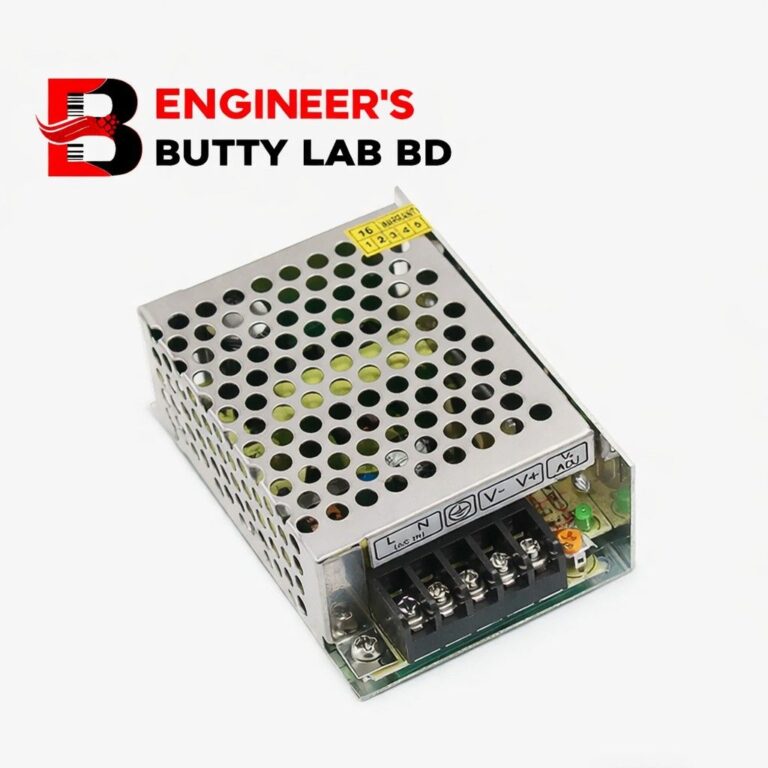
20W 5V 5A SMPS Power Supply Module Universal AC Input
In stock
Soldering Iron 60W & Heating Element Coil
In stock
Banana Plug Connector (Black-Red Pair)
In stock
Breadboard Full Size Bare 830 Tie Points
In stock

Reviews
Clear filtersThere are no reviews yet.